
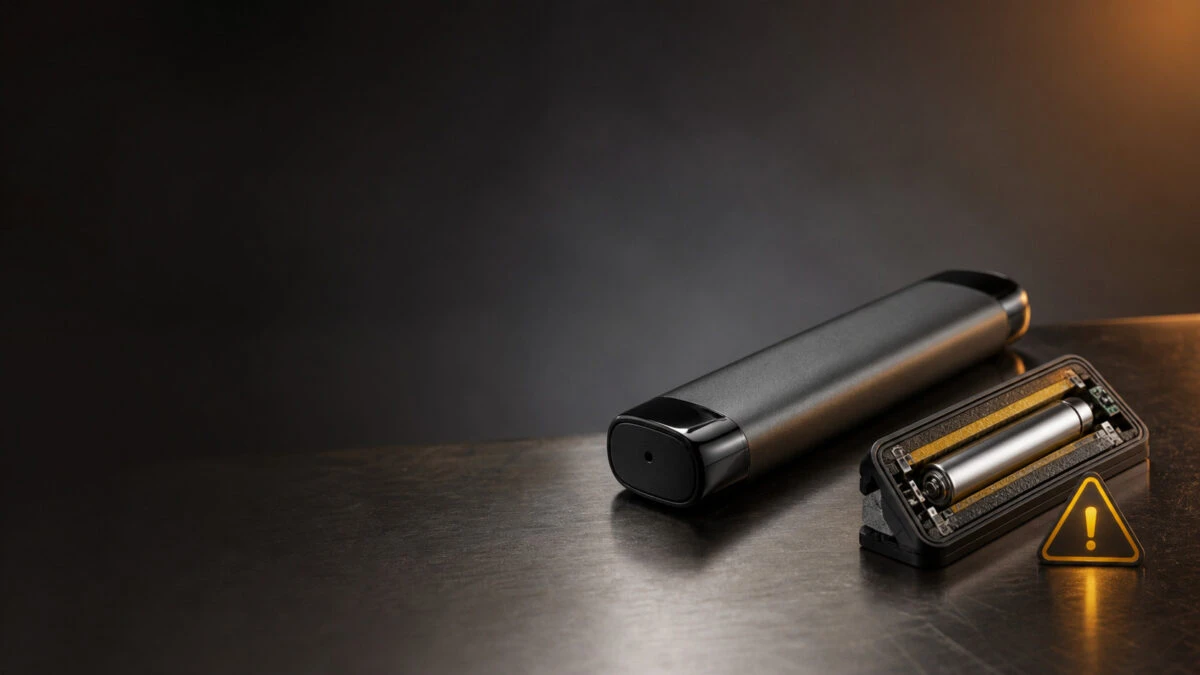
Disposable vapes are battery-powered electronic nicotine-delivery products. Fire or explosion events appear to be uncommon, but they can cause serious injuries and may endanger people nearby when they occur. This article provides general safety information for adults 21 years of age or older. It explains how to recognize possible battery-related warning signs, reduce avoidable risks, and report a product safety problem in the United States. It does not replace the manufacturer’s instructions, local disposal requirements, or guidance from emergency responders.
Quick Answer: Can Disposable Vapes Catch Fire?
Yes. A disposable vape can overheat, catch fire, or, in rare cases, rupture. That does not mean every disposable vape presents the same risk or that an incident is expected during normal use.
The U.S. Food and Drug Administration (FDA) says vape fires and explosions appear to be uncommon, but they can be dangerous to users and people nearby. Battery-related problems may contribute to these incidents. Potential factors can include overheating, physical damage, a short circuit, internal cell failure, or a manufacturing defect. Source: FDA
The risk may be more serious when a battery incident occurs around flammable gases or liquids, including oxygen, propane, or gasoline. Keep battery-powered devices away from these hazards and follow the instructions for your specific model. Source: FDA
What Is Inside a Disposable Vape That Can Create a Fire Hazard?
Disposable vapes are battery-powered devices with electronic components. Features can vary by model, so check the product labeling and manufacturer’s instructions before use, charging, storage, or disposal.
Many battery-powered devices use lithium-ion batteries. Under certain failure conditions, these batteries can experience thermal runaway: a rapid, uncontrolled rise in temperature that may lead to smoke, venting gases, fire, or rupture. Thermal runaway does not happen to every device. It is a potential battery-failure event that may be associated with overheating, damage, puncture, short circuiting, or internal defects. Source: USFA
If a device is damaged, unusually hot, leaking, swollen, or behaving abnormally, stop using it. Do not assume that a device is safe simply because it still appears to work.
Warning Signs You Should Not Ignore
Stop using a disposable vape if you notice any of the following:
- It becomes unusually hot during use, charging, or storage.
- The casing appears swollen, warped, cracked, or otherwise damaged.
- You notice leaking liquid, discoloration, or material coming out of the device.
- It produces a burning smell, unusual odor, popping sound, hissing sound, smoke, or sparks.
- It has been crushed, punctured, dropped heavily, or exposed to water.
- It does not operate as described in the manufacturer’s instructions.
The U.S. Fire Administration advises people to stop using lithium-ion batteries that show signs such as odor, color change, excessive heat, shape change, leaking, or unusual noises. Source: USFA
Do not open, puncture, modify, or attempt to repair a damaged disposable vape. Do not try to use it again after it has overheated or started making abnormal sounds. Check with your local household hazardous-waste, e-waste, or battery-recycling program for disposal instructions.
Everyday Habits That Can Raise the Risk
A single mistake does not guarantee a fire. However, certain conditions may increase the chance of battery damage or overheating.
Avoid extreme temperatures. Do not leave a vape in direct sunlight, on a hot dashboard, or in a parked car during summer heat. Avoid exposing it to freezing conditions. The FDA advises protecting vapes from extreme temperatures and not charging them in extreme heat or cold. Source: FDA
If your device is designed to be recharged, only recharge it when the manufacturer’s instructions expressly permit it. Use the charging method specified for that model. Charge on a clean, flat, visible surface away from items that can easily burn. Do not charge on a couch, bed, pillow, or under blankets, where heat may build up. Do not leave a rechargeable device charging overnight or unattended. Source: FDA
Keep the device away from flammable gases and liquids. Do not use, charge, or store it near oxygen equipment, propane tanks, gasoline, or other fuels. This is especially important near grills, garages, gas stations, and areas where medical oxygen is in use. Source: FDA
Finally, avoid placing a device where it may be crushed, pierced, or exposed to heat. For products with exposed electrical contacts, keep them away from metal objects such as keys or coins.
Safer Storage, Charging, and Disposal Practices
Use and store a disposable vape according to the manufacturer’s instructions. Keep it at a moderate temperature and away from direct sunlight, heat sources, children, pets, and combustible materials.
If your device is rechargeable:
- Use only the charging method specified for that model.
- Charge it in an open, visible area on a stable surface.
- Do not charge while sleeping or away from home.
- Disconnect it if it becomes unusually hot, smells unusual, leaks, or shows signs of damage.
If the device is not designed to be recharged, do not attempt to recharge it. Do not alter the device to make it rechargeable.
When a disposable vape reaches the end of its life—or if it is damaged—do not assume it belongs in ordinary household trash. It may contain a lithium-ion battery and electronic components. The USFA advises against putting lithium-ion batteries in the trash and recommends using an appropriate local recycling location. Source: USFA
Check with your city, county, retailer, battery-recycling service, or household hazardous-waste program to determine which disposal option applies where you live.
Before flying, check current Transportation Security Administration requirements and the policies of your airline for e-cigarettes and other battery-powered devices. Requirements may change and can vary by carrier.
What to Do If a Disposable Vape Starts Smoking, Hissing, or Catching Fire
If a device is smoking, hissing, venting, sparking, or burning, prioritize personal safety.
Move away from the device if you can do so safely. Warn others nearby and avoid breathing smoke or fumes. Do not hold a device that is hot, smoking, or on fire. Do not open, puncture, crush, or attempt to dismantle it.
Call 911 for a fire, heavy smoke, injury, immediate danger to people or property, or any situation you cannot safely manage. Follow instructions from emergency responders.
A lithium-ion battery incident may present a risk of reignition even after visible flames appear to be out. Source: USFA Do not resume using a damaged device. Follow instructions from local emergency responders or your local waste-disposal authority.
Once the situation is safe, keep information that may help identify the product, such as the brand, model, packaging, purchase record, and photos taken from a safe distance.
How to Report a Vape Fire, Overheating Event, or Product Defect in the U.S.
You can report a fire, explosion, overheating event, suspected defect, injury, leaking issue, or other unexpected quality problem involving a disposable or reusable vape to the FDA’s Safety Reporting Portal.
The FDA asks reporters to include details such as the manufacturer, brand, model, where the product was purchased, whether it was modified, and how it was being used. A report does not itself establish the cause of an incident, but accurate reports can help regulators identify potential safety or quality concerns. Source: FDA
FAQ
Can a disposable vape catch fire when it is not being used?
It may be possible if a battery has been damaged or fails, even when the device is not actively in use. Keep devices away from heat and flammable materials, and stop using a product that becomes hot, swollen, damaged, leaking, or unusual.
Is it safe to leave a disposable vape in a hot car?
No. Extreme heat may damage a battery or increase the risk of overheating. Do not leave a vape in direct sunlight or a hot vehicle. Source: FDA
What should I do if my vape feels hot or starts hissing?
Stop using it immediately. Do not charge, open, or handle a device that is hot, smoking, or hissing. Move away and call 911 if there is fire, smoke, injury, or immediate danger.
Can I throw a disposable vape in household trash?
Check local rules first. Because it may contain a lithium-ion battery and electronic components, an approved battery, e-waste, or household hazardous-waste collection option may be more appropriate. Source: USFA
Where can I report an overheating or fire incident?
Use the FDA Safety Reporting Portal to report a tobacco-product safety or quality problem.
Stay Informed and Report Safety Concerns
Read the FDA’s vape battery fire-safety guidance.
Report a vape fire, overheating event, or suspected defect to the FDA.
For adults 21 years of age or older only. Follow the instructions for your specific device and all applicable federal, state, and local requirements. This article provides general safety information and is not emergency, medical, legal, or fire-response advice.

 English
  German
  Italian
  French
  Spanish
  Dutch
Dutch  Swedish
  Japanese
  Polish